
- Home
- Investing
- Stocks
- Tech Stocks
SpaceX isn't the only company shooting for the Moon and beyond.
 By
Simon Constable
Published
21 July 2026
In
Features
By
Simon Constable
Published
21 July 2026
In
Features
When you purchase through links on our site, we may earn an affiliate commission. Here’s how it works.
 (Image credit: Getty Images)
- Copy link
- X
Space exploration came to the world more than a decade after World War II ended. To begin with, two countries dominated the field: America under the auspices of NASA (National Aeronautics and Space Administration) and the Soviet Union's slew of space design bureaus. It got dubbed the Space Race.
Fast forward to now, and there's another space race, this time it's happening via private and public enterprise. That means you could profit from companies involved in the space sector by purchasing relevant stocks. But which ones?
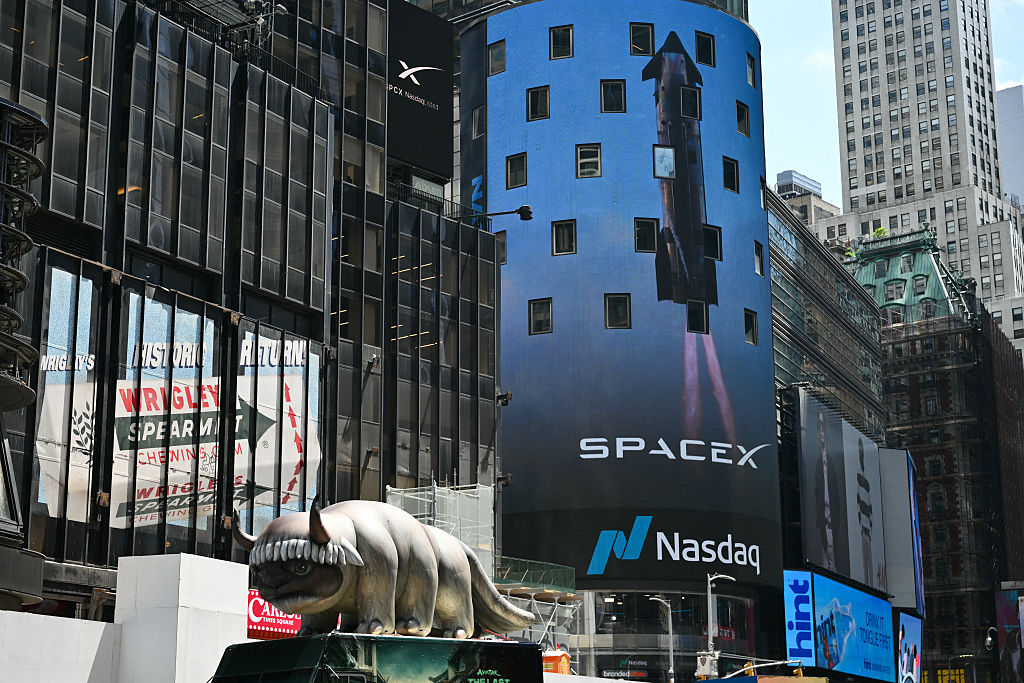
Top of the headlines is Elon Musk's SpaceX (the Space Exploration Technologies Corp, ticker symbol: SPCX), which, as well as rocketry, includes data centers, artificial intelligence and Starlink, the 10-satellite communications network. The company's initial public offering, in June, raised an extraordinary $85.7 billion, $10 billion more than expected. That made it the largest IPO in history. As if that wasn't enough excitement, SpaceX's shares soared to approximately $177 in less than a week, up from $135 at the IPO. By then, the market capitalization hit $2.4 trillion.
From just $107.88 $24.99 for Kiplinger Personal Finance
Become a smarter, better informed investor. Subscribe from just $107.88 $24.99, plus get up to 4 Special Issues
CLICK FOR FREE ISSUE
Sign up for Kiplinger’s Free Newsletters
Profit and prosper with the best of expert advice on investing, taxes, retirement, personal finance and more - straight to your e-mail.
Profit and prosper with the best of expert advice - straight to your e-mail.
Sign upAs with many things involving Elon Musk, there are those who love it and those who think the opposite. Michael Monaghan, portfolio manager at Founder ETFs in Dallas is among the former: "We are bullish on SpaceX. We think SpaceX will be the dominant space company with the highest efficiency and lowest price."
Monaghan also views a defense angle that SpaceX could benefit from. "The U.S. wants a moon base, and there is only one company that can do this: SpaceX," he says. "It's being planned partly for geopolitical reasons, with a new report saying, 'the Space Force needs to prepare for an in-person moon conflict with China.'"
On the other hand, there are skeptics, notably Morningstar's industrial equity analyst Nick Owens, who believes the value of SpaceX is $63 per share, which is less than half the IPO price. He's waiting for evidence that SpaceX's goal of putting data centers in space, along with artificial intelligence, is likely to materialize.
"The validation evidence would be that the rockets are reliable," Owens says. "And to find out the commercial viability in space, we will want to know the relative costs to those data centers on Earth."
Of course, there is more to the new space race than SpaceX. For instance, there's Rocket Lab (RKLB), a launch services provider. "I am very positive they are doing really good work in small launches that few others do," says Keith Snyder, a senior analyst at CFRA Research, based near Denver.
Snyder recently published a comment saying that Rocket Lab "is recognized as a preferred supplier across the space industry, with components and platforms being selected for flagship missions such as Artemis, Mars rovers and the International Space Station resupply, as well as for national security programs."
There's also good news on bookings, according to Snyder. He wrote, "Strong customer confidence and demand for [Rocket Lab's] Neutron launch vehicle was evidenced by significant pre-launch bookings." The company also has a record backlog of launches with 70 launches scheduled. Rocket Lab stock recently traded at $107, but Snyder has a one-year target of $140.
Aerospace company Boeing (BA) might not stand out as a major space competitor, but it does have a role in making bespoke rockets, rather than mass-produced ones, writes CFRA analyst Matt Miller. He also notes that Boeing has huge revenue, mostly from its commercial airplane sales: $89.5 billion last year and a forecast of $98 billion this year.
There's also limited competition for its products. The combination of solid revenue and minimal competition (notably from Airbus) should provide some economic ballast for the stock while still giving it a foothold in the Space sector. Miller has a 12-month target of $278 for Boeing stock, compared to a recent price of $223.
For those who want to avoid buying individual stocks, there are exchange-traded funds that track baskets of space-related stocks, such as the VanEck Space ETF (WARP), the Procure Space ETF (UFO) and the ARK Space & Defense Innovation ETF (ARKX). Overall, these funds will likely be less volatile than any individual space-related shares.
Note: This item first appeared in Kiplinger Retirement Report, our popular monthly periodical that covers key concerns of affluent older Americans who are retired or preparing for retirement. Subscribe for retirement advice that's right on the money.
Related Content
- The Best Tech Stocks to Buy
- Best AI Stocks to Buy: Smart Artificial Intelligence Investments
- How Defense and Space Are Becoming the Next Frontier for Investors
Simon ConstableSocial Links NavigationContributing writerSimon Constable is co-author of The Wall Street Journal Guide to the 50 Economic Indicators That Really Matter.