- Home
- Investing
- Economy
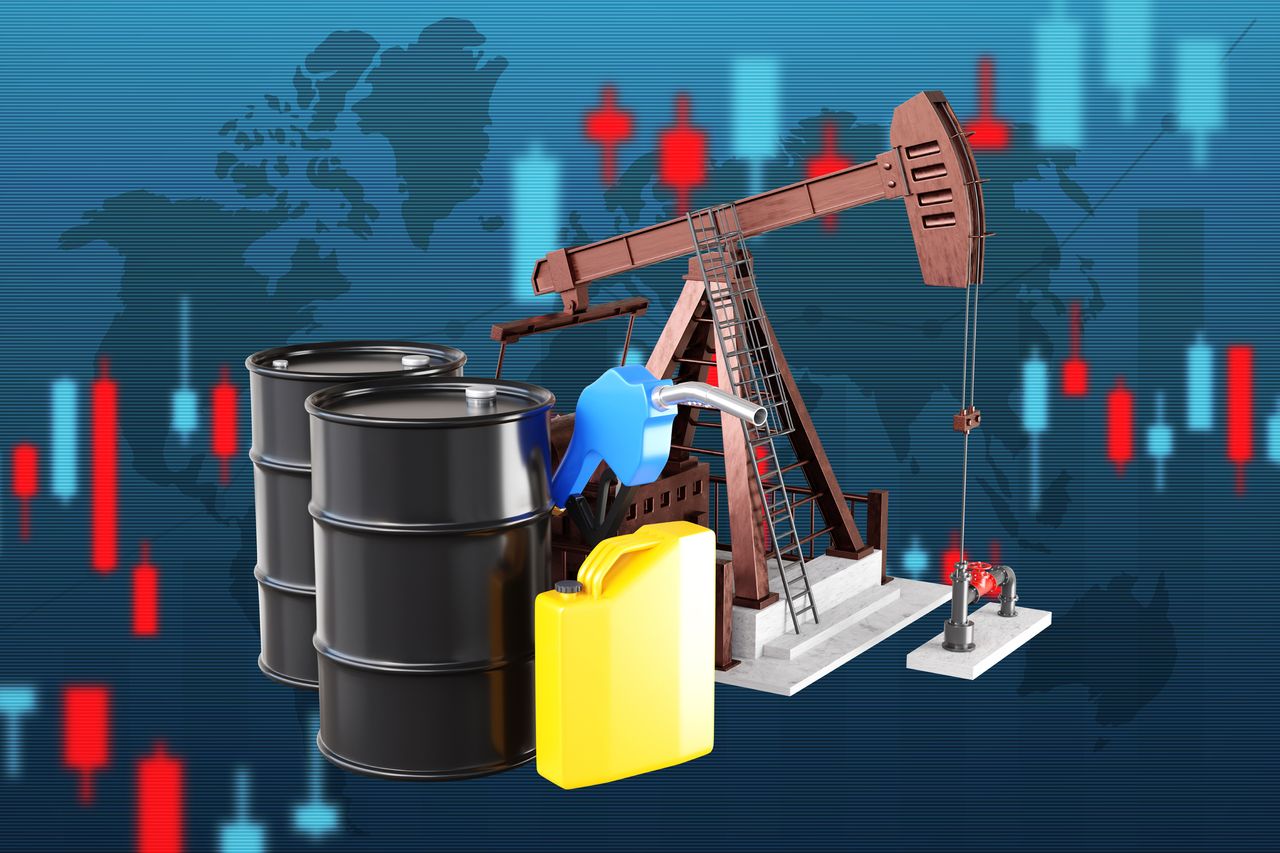
With much of the Middle East's critical oil and gas exports cut off from global markets, rising energy costs could give inflation new momentum.



 By
Jim Patterson, Rodrigo Sermeño, Matthew Housiaux, David Payne
published
16 March 2026
in Features
By
Jim Patterson, Rodrigo Sermeño, Matthew Housiaux, David Payne
published
16 March 2026
in Features
When you purchase through links on our site, we may earn an affiliate commission. Here’s how it works.
- Copy link
- X
Profit and prosper with the best of Kiplinger's advice on investing, taxes, retirement, personal finance and much more. Delivered daily. Enter your email in the box and click Sign Me Up.
Contact me with news and offers from other Future brands Receive email from us on behalf of our trusted partners or sponsors By submitting your information you agree to the Terms & Conditions and Privacy Policy and are aged 16 or over.You are now subscribed
Your newsletter sign-up was successful
Want to add more newsletters?

Delivered daily
Kiplinger Today
Profit and prosper with the best of Kiplinger's advice on investing, taxes, retirement, personal finance and much more delivered daily. Smart money moves start here.
Signup +
Sent five days a week
Kiplinger A Step Ahead
Get practical help to make better financial decisions in your everyday life, from spending to savings on top deals.
Signup +
Delivered daily
Kiplinger Closing Bell
Get today's biggest financial and investing headlines delivered to your inbox every day the U.S. stock market is open.
Signup +
Sent twice a week
Kiplinger Adviser Intel
Financial pros across the country share best practices and fresh tactics to preserve and grow your wealth.
Signup +
Delivered weekly
Kiplinger Tax Tips
Trim your federal and state tax bills with practical tax-planning and tax-cutting strategies.
Signup +
Sent twice a week
Kiplinger Retirement Tips
Your twice-a-week guide to planning and enjoying a financially secure and richly rewarding retirement
Signup +
Sent bimonthly.
Kiplinger Adviser Angle
Insights for advisers, wealth managers and other financial professionals.
Signup +
Sent twice a week
Kiplinger Investing Weekly
Your twice-a-week roundup of promising stocks, funds, companies and industries you should consider, ones you should avoid, and why.
Signup +
Sent weekly for six weeks
Kiplinger Invest for Retirement
Your step-by-step six-part series on how to invest for retirement, from devising a successful strategy to exactly which investments to choose.
Signup + An account already exists for this email address, please log in. Subscribe to our newsletterTo help you understand what's going on in politics and the economy and what we expect to happen in the future, our highly experienced Kiplinger Letter team will keep you abreast of the latest developments and forecasts (Get a free issue of The Kiplinger Letter or subscribe). You'll get all the latest news first by subscribing, but we will publish many (but not all) of the forecasts a few days afterward online. Here’s the latest…
Iran is down but not out. What lies ahead for the military situation and its economic impacts? A clear-cut victory may prove elusive. American forces have performed effectively and demonstrated the superiority of U.S. weaponry. But Iran’s regime remains in place, shows no signs of collapsing, and vows to keep fighting. Its defeat may require a ground invasion, a daunting scenario that President Trump appears unwilling to order.
Tehran is waging an economic conflict since it can’t defeat the U.S. on the battlefield. The target: The region’s energy industry, a vital component of the global economy. Exports of oil and gas from the Persian Gulf are on hold, forcing some countries in the region to curb output. Tankers, refineries and other key energy facilities have been damaged by Iranian strikes. The longer this situation goes on, the harder it will become to restart energy exports whenever peace returns. Energy prices have already jumped. Barring a ceasefire, they will keep rising. Iran is betting that Trump will have to back off as voters sour on rising gas prices. He is betting the battered regime will fold first. As of now, the most likely scenario seems to be an incomplete U.S. victory, in which Iran is left badly weakened, but defiant and intent on rearming for later.
Article continues belowFrom just $107.88 $24.99 for Kiplinger Personal Finance
Become a smarter, better informed investor. Subscribe from just $107.88 $24.99, plus get up to 4 Special Issues
CLICK FOR FREE ISSUE
Sign up for Kiplinger’s Free Newsletters
Profit and prosper with the best of expert advice on investing, taxes, retirement, personal finance and more - straight to your e-mail.
Profit and prosper with the best of expert advice - straight to your e-mail.
Sign upThe most serious economic risk of the war for the U.S. if the conflict drags on, is renewed inflation due to high energy prices. The economy is likely strong enough to stay out of recession, even though higher gas prices would probably crimp spending by many consumers. But if high fuel prices last longer and filter through the economy more broadly, inflation could prove painful and force the Federal Reserve to nix plans to trim interest rates. That would weigh on housing and other credit-sensitive sectors. In that scenario, Trump would come under mounting political pressure to declare peace.
An industry particularly exposed to the ongoing Middle East chaos is farming. About half of urea fertilizer ships through the Strait of Hormuz, which Iran has effectively closed to maritime traffic, as does a fifth of global shipments of liquefied natural gas — vital to production as both a feedstock and an energy source.
Prices are on the rise. Fertilizer prices have already increased by nearly 8%. Aluminum, another major Middle East commodity, has seen prices rise 32%. The effects of higher energy prices on Europe would be even more significant. Roughly 20% of the European Union’s crude oil and natural gas imports is sourced from the Middle East. The EU’s vulnerability is heightened by depleted gas storage following a cold winter. As with the energy price shock in 2022, a persistent rise in fuel prices now could spark another round of high inflation and a hit to GDP growth.
This forecast first appeared in The Kiplinger Letter, which has been running since 1923 and is a collection of concise weekly forecasts on business and economic trends, as well as what to expect from Washington, to help you understand what’s coming up to make the most of your investments and your money. Subscribe to The Kiplinger Letter.
Related Content
- How Rising Interest Rates Can Affect You
- What Will the Fed Do at Its Next Meeting
- Kiplinger Energy Outlook: Drivers Feel the Effects of War in Iran
- Gas Prices Are Rising Fastest in These States
 David PayneSocial Links NavigationStaff Economist, The Kiplinger Letter
David is both staff economist and reporter for The Kiplinger Letter, overseeing Kiplinger forecasts for the U.S. and world economies. Previously, he was senior principal economist in the Center for Forecasting and Modeling at IHS/GlobalInsight, and an economist in the Chief Economist's Office of the U.S. Department of Commerce. David has co-written weekly reports on economic conditions since 1992, and has forecasted GDP and its components since 1995, beating the Blue Chip Indicators forecasts two-thirds of the time. David is a Certified Business Economist as recognized by the National Association for Business Economics. He has two master's degrees and is ABD in economics from the University of North Carolina at Chapel Hill.