- Home
- Investing
- Stocks
- IPOs
Bill Ackman will take his Pershing Square hedge fund firm public in a rare "combined IPO" with a new closed-end fund. Here's what investors need to know.
 By
Karee Venema
published
22 March 2026
in Features
By
Karee Venema
published
22 March 2026
in Features
When you purchase through links on our site, we may earn an affiliate commission. Here’s how it works.
- Copy link
- X
Profit and prosper with the best of Kiplinger's advice on investing, taxes, retirement, personal finance and much more. Delivered daily. Enter your email in the box and click Sign Me Up.
Contact me with news and offers from other Future brands Receive email from us on behalf of our trusted partners or sponsors By submitting your information you agree to the Terms & Conditions and Privacy Policy and are aged 16 or over.You are now subscribed
Your newsletter sign-up was successful
Want to add more newsletters?

Delivered daily
Kiplinger Today
Profit and prosper with the best of Kiplinger's advice on investing, taxes, retirement, personal finance and much more delivered daily. Smart money moves start here.
Signup +
Sent five days a week
Kiplinger A Step Ahead
Get practical help to make better financial decisions in your everyday life, from spending to savings on top deals.
Signup +
Delivered daily
Kiplinger Closing Bell
Get today's biggest financial and investing headlines delivered to your inbox every day the U.S. stock market is open.
Signup +
Sent twice a week
Kiplinger Adviser Intel
Financial pros across the country share best practices and fresh tactics to preserve and grow your wealth.
Signup +
Delivered weekly
Kiplinger Tax Tips
Trim your federal and state tax bills with practical tax-planning and tax-cutting strategies.
Signup +
Sent twice a week
Kiplinger Retirement Tips
Your twice-a-week guide to planning and enjoying a financially secure and richly rewarding retirement
Signup +
Sent bimonthly.
Kiplinger Adviser Angle
Insights for advisers, wealth managers and other financial professionals.
Signup +
Sent twice a week
Kiplinger Investing Weekly
Your twice-a-week roundup of promising stocks, funds, companies and industries you should consider, ones you should avoid, and why.
Signup +
Sent weekly for six weeks
Kiplinger Invest for Retirement
Your step-by-step six-part series on how to invest for retirement, from devising a successful strategy to exactly which investments to choose.
Signup + An account already exists for this email address, please log in. Subscribe to our newsletter
The market for initial public offerings (IPOs) is off to a slow start in 2026, with the pipeline pressured by broad risk-off sentiment, skittishness around all things artificial intelligence (AI) and geopolitical uncertainty.
According to Renaissance Capital, 48 IPOs have been filed this year through March 20, down more than 21% from the year prior. And 33 offerings have been priced, a 23% drop from 2025.
The IPO market regained its footing in 2025, but it's still far from the levels seen in 2021, says Kaush Amin, head of private market investing at U.S. Bank.
Article continues belowFrom just $107.88 $24.99 for Kiplinger Personal Finance
Become a smarter, better informed investor. Subscribe from just $107.88 $24.99, plus get up to 4 Special Issues
CLICK FOR FREE ISSUE
Sign up for Kiplinger’s Free Newsletters
Profit and prosper with the best of expert advice on investing, taxes, retirement, personal finance and more - straight to your e-mail.
Profit and prosper with the best of expert advice - straight to your e-mail.
Sign up"If the Iran conflict resolves in the near term with oil flow resuming to prior levels and earnings continue to deliver," Amin explains, "conditions are in place for a faster pace in 2026." What will matter most, he adds, "is pricing discipline and deal quality."
Looking ahead, there are several large private companies listed among the hottest upcoming IPOs this year – and one is right on our doorstep.
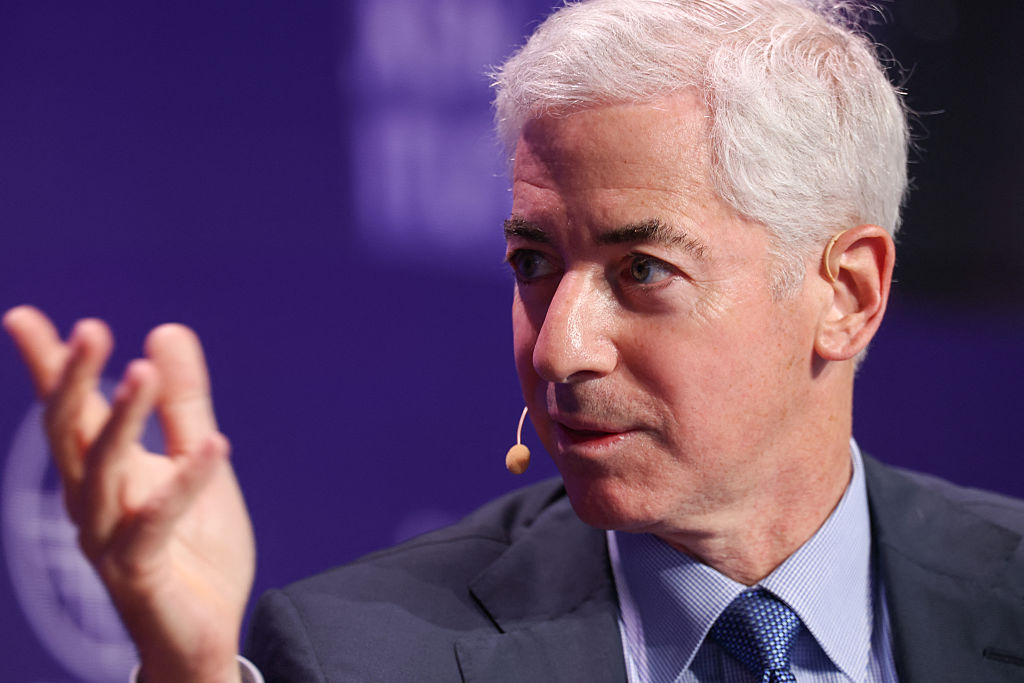
On March 10, Bill Ackman filed paperwork to launch Pershing Square USA, a closed-end fund that invests in a dozen or so large public companies. He's also taking Pershing Square, his hedge fund firm, public in a "combined IPO."
When is the Pershing Square IPO date?
While no official date has been announced for the Pershing Square IPO, the filing of the paperwork suggests that it could occur within the next several weeks.
According to the Form N-2, Pershing Square USA will list on the New York Stock Exchange (NYSE) and will trade under the ticker "PSUS." The shares will be priced at $50 each.
As part of the "combined offering," Ackman will simultaneously take his hedge fund firm public. Pershing Square will trade on the NYSE under the ticker symbol "PS." The two securities will be taken public simultaneously, but traded separately.
However, in order to participate in the PS IPO, investors must buy at least 100 shares of PSUS in its offering, which works out to a minimum initial investment of $5,000. They'll receive 20 shares of PS stock for every 100 shares of PSUS purchased in its IPO at no additional cost.
Pershing also said that it has commitments from private placement investors, including family offices, pension funds and ultra-high-net-worth investors, who will receive 30 shares of PS stock for each 100 shares of PSUS they purchase.
According to the S-1 filing, individual trading of each security – meaning investors can buy and sell shares of PSUS and PS on a separate basis – "will begin the first trading day following the pricing of the PSUS IPO."
This isn't the first time Ackman has attempted to take the closed-end fund public. In 2024, the billionaire investor withdrew plans for a Pershing Square USA IPO in order "to reevaluate PSUS's structure."
The PSUS offering in mid-2024 sought to raise $2 billion, well below a prior target of $25 billion. Ackman is now seeking an offering size between $5 billion and $10 billion, which includes $2.8 billion in private commitments.
This would easily make it one of the biggest IPOs of the year.
What is a closed-end fund?
A closed-end fund (CEF) is an investment company that raises capital through an IPO. Unlike a mutual fund or an exchange-traded fund (ETF), a CEF offers a fixed number of shares at inception.
"Because there is no ongoing creation or redemption mechanism, CEFs can trade at prices that diverge materially from NAV," writes Kiplinger contributor Tony Dong in his feature on the best closed-end funds to buy. "For example, a CEF with $15 per share in underlying assets may trade at $17 if demand is strong, or at $13 if investor interest is weak."
Dong adds that the structure of CEFs gives "managers more flexibility to own less liquid assets such as private credit or private equity."
The investment strategy for Pershing Square USA, according to the SEC filing, is to acquire "long-term, large minority stakes in 12 to 15 high-quality, predominantly North American-listed, large-capitalization growth companies at attractive valuations during periods in which the Manager believes they have underperformed their potential and/or when the Manager believes they are undervalued because the market underestimates their potential or overestimates the impact of certain negative factors on their businesses."
The filing also states that management will complement its core strategy using options and credit default swaps.
Should you buy the PSUS IPO?
"An initial public offering enables a private company to 'go public,' or start trading in public markets, by issuing its own shares on a stock exchange for the first time. In this way, any investor can buy shares and the company can raise capital to grow," Kiplinger contributing writer Tom Taulli writes in his article, "What Is an Initial Public Offering (IPO)?".
But buyer beware: IPOs can be volatile — especially for retail investors. And in the "froth and frenzy, opportunities mix with peril," writes David Milstead, senior associate editor at the Kiplinger Personal Finance magazine. "The safest course may be to wait for companies to settle in some months after their debut, after one or two quarterly earnings reports."
And U.S. Bank's Amin reminds us that the Pershing Square IPO "is unusual" because of its combined offering for a closed-end fund and an equity stake in the hedge fund company. "Investors should make sure they understand what they own, how the fund structure works, and how market price can deviate from underlying value in closed‑end vehicles," he advises.
As for PS stock, Pershing shares a boilerplate warning in its S-1 filing: "No public market for our common stock currently exists, and an active trading market for our common stock may never develop or be sustained after the combined offering. Following the combined offering, our stock price may fluctuate significantly."
Related content
- Stock Picks That Billionaires Love
- Best Blue Chip Stocks: 21 Hedge Fund Top Picks
- How to Invest in Companies Before They Go Public
 Karee VenemaSocial Links NavigationSenior Investing Editor, Kiplinger.com
With over a decade of experience writing about the stock market, Karee Venema is the senior investing editor at Kiplinger.com. She joined the publication in April 2021 after 10 years of working as an investing writer and columnist at a local investment research firm. In her previous role, Karee focused primarily on options trading, as well as technical, fundamental and sentiment analysis.