
- Home
- Retirement
With regional war and financial uncertainty, is this the right time to retire in Europe? We asked the experts.
 By
Maurie Backman
published
22 March 2026
in Features
By
Maurie Backman
published
22 March 2026
in Features
When you purchase through links on our site, we may earn an affiliate commission. Here’s how it works.
- Copy link
- X
Profit and prosper with the best of Kiplinger's advice on investing, taxes, retirement, personal finance and much more. Delivered daily. Enter your email in the box and click Sign Me Up.
Contact me with news and offers from other Future brands Receive email from us on behalf of our trusted partners or sponsors By submitting your information you agree to the Terms & Conditions and Privacy Policy and are aged 16 or over.You are now subscribed
Your newsletter sign-up was successful
Want to add more newsletters?

Delivered daily
Kiplinger Today
Profit and prosper with the best of Kiplinger's advice on investing, taxes, retirement, personal finance and much more delivered daily. Smart money moves start here.
Signup +
Sent five days a week
Kiplinger A Step Ahead
Get practical help to make better financial decisions in your everyday life, from spending to savings on top deals.
Signup +
Delivered daily
Kiplinger Closing Bell
Get today's biggest financial and investing headlines delivered to your inbox every day the U.S. stock market is open.
Signup +
Sent twice a week
Kiplinger Adviser Intel
Financial pros across the country share best practices and fresh tactics to preserve and grow your wealth.
Signup +
Delivered weekly
Kiplinger Tax Tips
Trim your federal and state tax bills with practical tax-planning and tax-cutting strategies.
Signup +
Sent twice a week
Kiplinger Retirement Tips
Your twice-a-week guide to planning and enjoying a financially secure and richly rewarding retirement
Signup +
Sent bimonthly.
Kiplinger Adviser Angle
Insights for advisers, wealth managers and other financial professionals.
Signup +
Sent twice a week
Kiplinger Investing Weekly
Your twice-a-week roundup of promising stocks, funds, companies and industries you should consider, ones you should avoid, and why.
Signup +
Sent weekly for six weeks
Kiplinger Invest for Retirement
Your step-by-step six-part series on how to invest for retirement, from devising a successful strategy to exactly which investments to choose.
Signup + An account already exists for this email address, please log in. Subscribe to our newsletter

Question: We’re set to retire in Europe, but my wife thinks we should reconsider because of the political and economic situation. I want to go now. Who's right?
Answer: Some people picture themselves retiring in the same neighborhood they lived in as working adults. Others imagine themselves ditching the U.S. and retiring abroad.
As of late 2024, more than 170,000 retired workers were receiving Social Security benefits in Europe. And in a recent Harris Poll, 51% of baby boomers said they could see themselves moving to Western Europe. That same poll found that 52% of Americans overall think they can enjoy a higher quality of life abroad.
Article continues belowFrom just $107.88 $24.99 for Kiplinger Personal Finance
Become a smarter, better informed investor. Subscribe from just $107.88 $24.99, plus get up to 4 Special Issues
CLICK FOR FREE ISSUE
Sign up for Kiplinger’s Free Newsletters
Profit and prosper with the best of expert advice on investing, taxes, retirement, personal finance and more - straight to your e-mail.
Profit and prosper with the best of expert advice - straight to your e-mail.
Sign upIt may be that you and your wife planned to move to Europe in conjunction with retirement. If the current political and economic situation is making one of you question those plans, that's understandable. Here's what you need to consider if you're torn.
For Americans, Europe remains high in demand
At a time when there's so much uncertainty and conflict on the home front, many Americans are thinking of packing their bags and abandoning the U.S. Europe tends to be a popular escape.
Robert Levitt is the founder of France-based Levitt Capital Management, which helps Americans with all manner of financial aspects of planning, moving to, and living in Europe. He says, "The recent political and economic situation has in fact driven more Americans to move to Europe. We have never been so much in demand at our firm."
The reason for that mass exodus from the U.S. boils down to cost of living and politics, says Levitt.
"We see the primary reason that Americans are leaving the U.S. is the desire to avoid the divisions in their country and even their families," he explains. "In Europe, politics has not yet taken on the same level of importance in daily life."
Levitt also says it's a good time to move to Europe because not only are Americans welcome there, but the U.S. dollar is still quite strong in general and property prices are still reasonable.
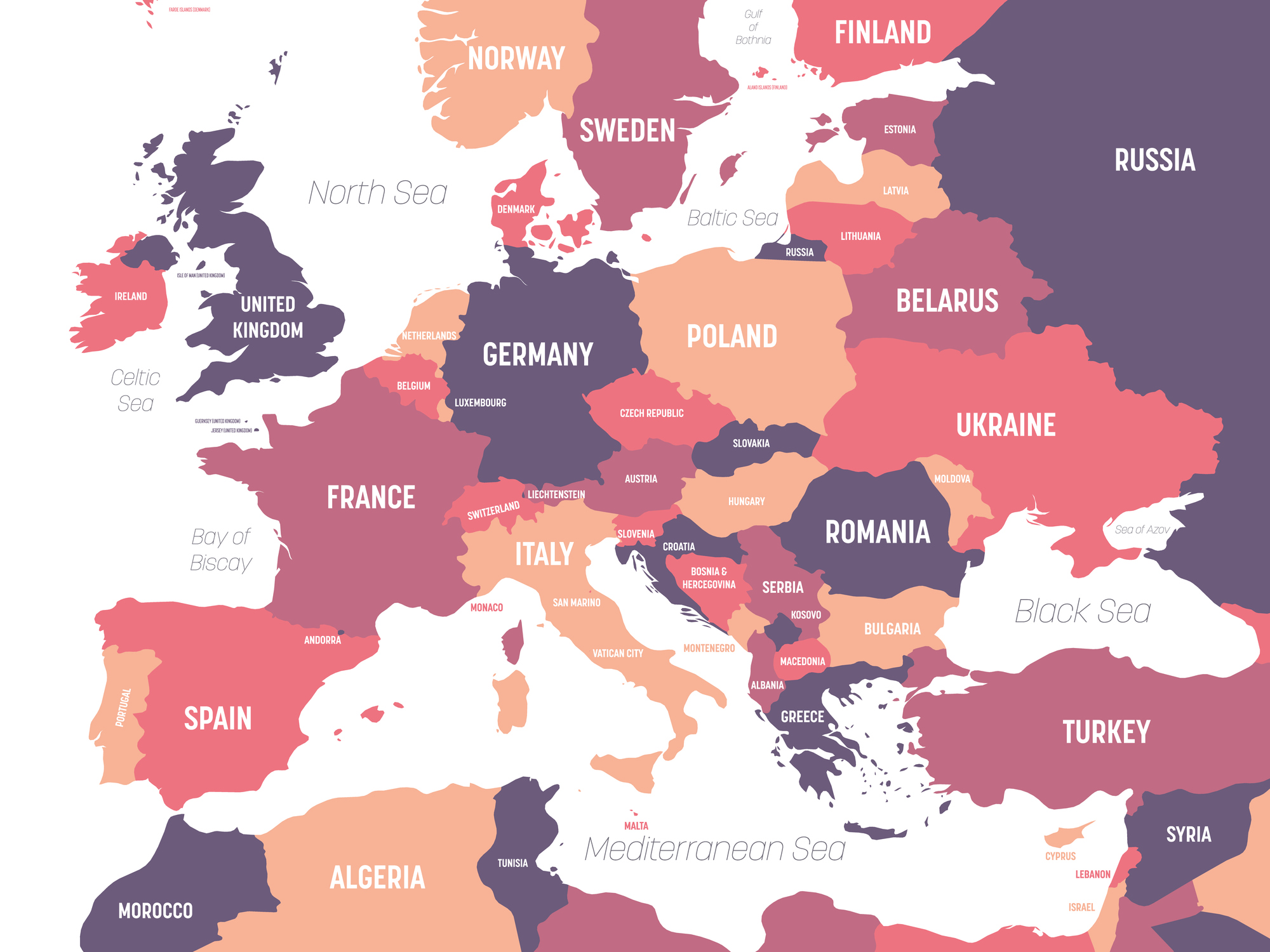
Don't discount geopolitical risk
While Americans may still be flocking to Europe for retirement, your wife is correct that security is a growing issue, especially as the U.S. softens its support for NATO.
As the war between Ukraine and Russia drags on, Europeans in NATO-member countries feel increasingly wary. Consider that at about 1,280 miles, the distance from Athens, Greece, to the Ukrainian war zone of Donetsk is about half the width of the U.S. (from Washington, DC, to San Francisco). If Ukraine falls, "European defense readiness will be tested more than it has ever been since the collapse of the Soviet Union," according to the Eurasia Group.
About two-thirds of Europeans said that their country is "under threat" in a February poll by the European Union. The highest percentages of residents reporting concern for their country's safety were in France (80%), the Netherlands and Denmark (77%), and Cyprus and Germany (75%).
On the brighter side, most respondents expressed confidence in their country's ability to mount an effective defense, especially those in Luxembourg (76%), Portugal (74%), Cyprus (73%) and Lithuania (71%).
In terms of economic outlook, the picture is much sunnier. Many European countries are poised for greater growth after years of stagnation or poor investment, according to a recent EY Report. However, if the war in Iran drags on, it could lower GDP and raise inflation, though these risks apply to the U.S. as well as Europe.

Tackle fear of taxes and finances head on
If your wife is hesitant to move to Europe despite having previously planned to, doing your share of research on the costs, challenges, and pros and cons might help her feel more comfortable.
Federica Grazi, Founder and Managing Director at Mitos Relocation Solutions, regularly works with Americans deciding if and where to move in Europe. And she says that while it's certainly possible to benefit financially from a move to Europe, careful preparation is key.
"Most European countries have relatively high taxation," she cautions. However, she says, some offer specific tax incentives for retirees relocating from abroad.
"Greece, for example, offers a flat 7% tax rate on all foreign income for 15 years," Grazi says. "Italy offers the same rate for 10 years, although it is restricted to certain southern regions. Cyprus goes a step further, taxing foreign pensions at 5% indefinitely while fully exempting foreign dividends and interest for 17 years."
Grazi also says it's important to research the cost of living before choosing a new country to call home.
"While most of Europe is generally cheaper than the United States, there are significant regional and local variations," she explains. "Beyond the usual categories of housing and food, health care costs should be considered carefully, as in some countries they can make a meaningful difference to overall expenses."
Grazi also cautions that currency mismatch is an often-overlooked factor.
"I typically recommend diversifying currencies strategically," she says, "so that a sharp change in dollar strength does not significantly impact long-term purchasing power."
Consider a trial run
There are plenty of good reasons to move to Europe — the cost savings, the culture, the history, and the natural beauty, to name a few. But before you decide to call Europe home, you may want to spend a meaningful amount of time there without a commitment.
Scott Stratton, CFP, CFA, and President at Good Life Wealth Management, moved to Paris three years ago. And he says that while retiring in Europe remains an appealing choice, it's best to do a trial run before uprooting your life entirely.
"I would recommend anyone considering retiring in Europe to make several 'reconnaissance' trips to different places for a month or two to get a feel for life in those locations," Stratton says. "Then, if they want to move to Europe, to rent at first, so they could easily move back in a year or two if they change their mind."
As Stratton explains, "For those who move to Europe long-term, it can be difficult to feel part of a community. A place that feels welcoming as a tourist can still feel isolated and lonely as an expat."
For this reason, it's a good idea to consider renting for 12 months or longer to make sure you've found a good fit before selling your home back in the U.S. and committing to a home purchase in Europe.
Also, Stratton cautions, "Some will find that the distance from their children, grandchildren, and friends may become a source of frustration over time."
Of course, if you do decide to make Europe your permanent home, you'll need to maintain financial ties to the U.S., says Stratton. You may have U.S. retirement accounts, and you'll want your Social Security. And as Grazi says, it's important to do your research on taxes.
"While the income taxes can be fairly straightforward, expats should also make sure to research inheritance taxes, estate planning, and capital gains," Stratton warns. "Inheritance taxes could reach 45% in some countries with just a few million dollars."
Address the fear factor before making a move
If your wife has concerns about moving to Europe, it's not just in her head. Grazi acknowledges that awareness and concern about the political climate have grown considerably in Europe. But that doesn't mean Europeans are in a panic.
"There have been some episodes of high alert, as for example recent drone launches in Cyprus, although international response was fast and strong," she says. "Even contacts living locally don't really fear that the conflict will spread within Europe's borders."
Stratton agrees.
"Politically, many Europeans are concerned about the Russian aggression in Ukraine expanding westward," he says. "There are also concerns about Trump's apparent declining commitment to NATO."
In spite of that, Stratton thinks most Europeans feel quite safe. And as he points out, "The rate of violent crime is much lower in Europe, there are almost no mass shootings, and we don't see police and federal agents killing citizens. The U.S. expats I know are much more concerned for their safety when they go back to the U.S. than when they are in Europe."
Levitt, meanwhile, says his clients seem more concerned about their portfolio returns than their safety, given the current climate and recent events.
If your wife is worried about moving overseas, it may help her to talk to people living and working in Europe to get a sense of what things are really like. Forums like Expat.com could make it easier to connect with Americans living abroad to better gauge the situation.
All told, Stratton says, "Retirement is a big change already without moving to another continent."
If your wife is feeling skittish, help her access the resources she needs to feel more comfortable before moving forward.
Get expert financial strategies and lifestyle insights delivered to your inbox. Subscribe to our free newsletter, Retirement Tips.
Read moreRead less▼Read More
- The 10 Safest Countries to Visit in the World
- How to Manage Retirement Savings When Living Abroad
- Living in Portugal as a US Retiree
- We Retired at 70 With $4.3 Million. My Wife Won't Spend 'Our Grandkids' Inheritance,' but I Want to Travel.
 Maurie BackmanContributing Writer
Maurie Backman is a freelance contributor to Kiplinger. She has over a decade of experience writing about financial topics, including retirement, investing, Social Security, and real estate. She has written for USA Today, U.S. News & World Report, and Bankrate. She studied creative writing and finance at Binghamton University and merged the two disciplines to help empower consumers to make smart financial planning decisions.