- Home
- Personal Finance
- How To Save Money
- Family Savings
From groceries to flights, higher oil prices ripple through your budget. Here's how the chain reaction works and when you may start to feel it.
 By
Choncé Maddox
published
27 March 2026
in Features
By
Choncé Maddox
published
27 March 2026
in Features
When you purchase through links on our site, we may earn an affiliate commission. Here’s how it works.
- Copy link
- X
Profit and prosper with the best of Kiplinger's advice on investing, taxes, retirement, personal finance and much more. Delivered daily. Enter your email in the box and click Sign Me Up.
Contact me with news and offers from other Future brands Receive email from us on behalf of our trusted partners or sponsors By submitting your information you agree to the Terms & Conditions and Privacy Policy and are aged 16 or over.You are now subscribed
Your newsletter sign-up was successful
Want to add more newsletters?

Delivered daily
Kiplinger Today
Profit and prosper with the best of Kiplinger's advice on investing, taxes, retirement, personal finance and much more delivered daily. Smart money moves start here.
Signup +
Sent five days a week
Kiplinger A Step Ahead
Get practical help to make better financial decisions in your everyday life, from spending to savings on top deals.
Signup +
Delivered daily
Kiplinger Closing Bell
Get today's biggest financial and investing headlines delivered to your inbox every day the U.S. stock market is open.
Signup +
Sent twice a week
Kiplinger Adviser Intel
Financial pros across the country share best practices and fresh tactics to preserve and grow your wealth.
Signup +
Delivered weekly
Kiplinger Tax Tips
Trim your federal and state tax bills with practical tax-planning and tax-cutting strategies.
Signup +
Sent twice a week
Kiplinger Retirement Tips
Your twice-a-week guide to planning and enjoying a financially secure and richly rewarding retirement
Signup +
Sent bimonthly.
Kiplinger Adviser Angle
Insights for advisers, wealth managers and other financial professionals.
Signup +
Sent twice a week
Kiplinger Investing Weekly
Your twice-a-week roundup of promising stocks, funds, companies and industries you should consider, ones you should avoid, and why.
Signup +
Sent weekly for six weeks
Kiplinger Invest for Retirement
Your step-by-step six-part series on how to invest for retirement, from devising a successful strategy to exactly which investments to choose.
Signup + An account already exists for this email address, please log in. Subscribe to our newsletter
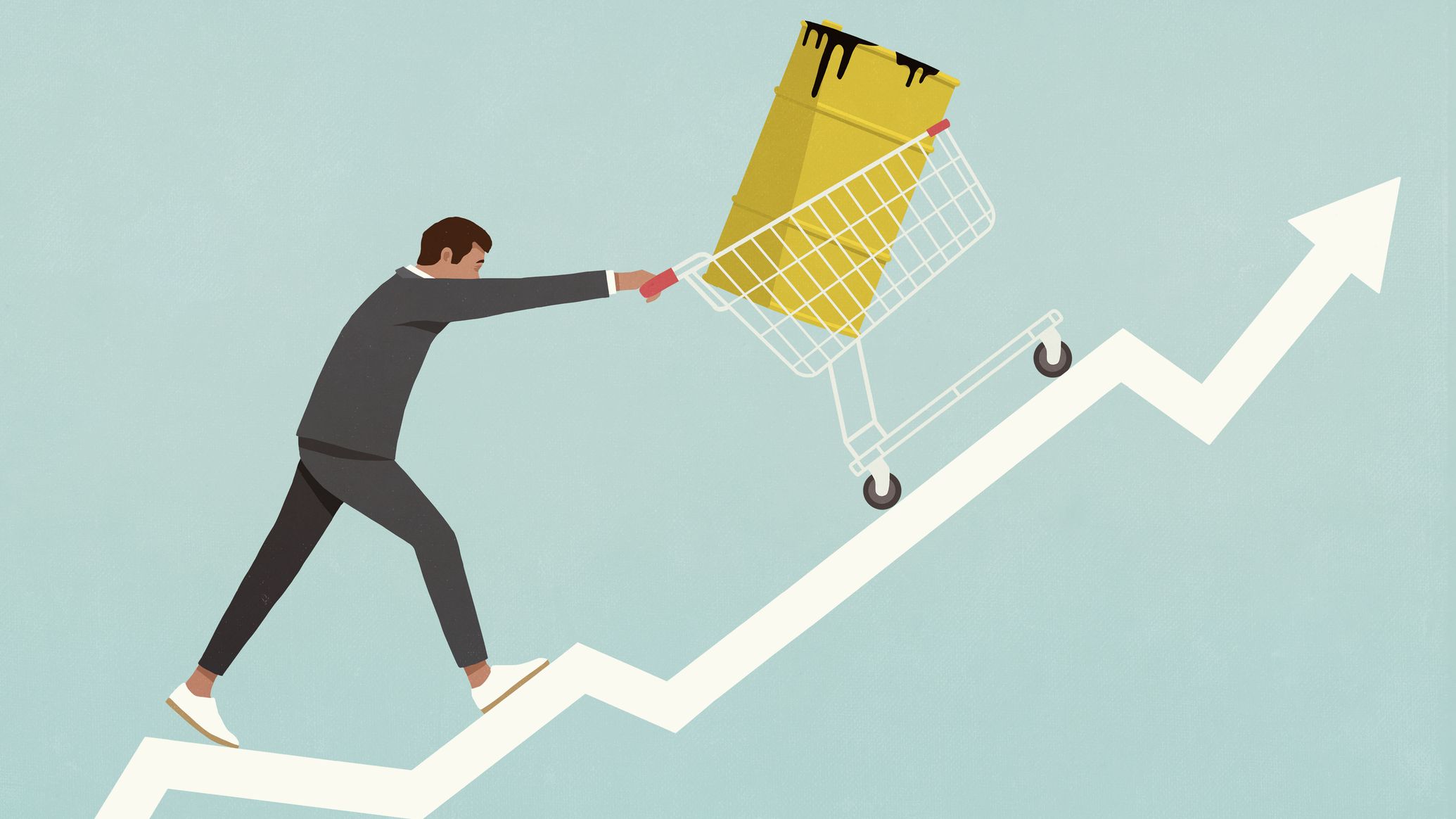
When oil prices climb, most people brace for higher gas prices, and stop there. But the impact of oil goes far beyond what you pay at the pump.
Oil is one of the most important inputs in the global economy. It powers transportation, supports manufacturing and even plays a role in food production. So when prices rise, the effects ripple outward and are often quiet at first. But then it shows up in places you might not immediately connect to crude oil.
And with ongoing geopolitical tensions, including the conflict involving Iran, markets are reacting quickly. Even modest increases in oil prices can gradually push up the cost of everyday goods and services. Here’s how that chain reaction works, and what it could mean for your budget in the coming weeks and months.
Article continues belowFrom just $107.88 $24.99 for Kiplinger Personal Finance
Become a smarter, better informed investor. Subscribe from just $107.88 $24.99, plus get up to 4 Special Issues
CLICK FOR FREE ISSUE
Sign up for Kiplinger’s Free Newsletters
Profit and prosper with the best of expert advice on investing, taxes, retirement, personal finance and more - straight to your e-mail.
Profit and prosper with the best of expert advice - straight to your e-mail.
Sign upOil touches more of your budget than you think
A barrel of crude oil doesn’t just become gasoline. After refining, it’s broken down into multiple products that power large parts of the economy.
Gasoline gets the most attention, but it’s only part of the story. Diesel fuels trucks that move goods across the country. Jet fuel powers air travel and cargo shipping. Petrochemicals are used to make plastics, packaging, clothing and electronics. Even agriculture relies on oil-based inputs, including fertilizer and fuel for farm equipment.
That's why oil price changes don't stay contained; they move through supply chains and eventually reach consumers in different ways.
What comes from a barrel of oil
A standard 42-gallon barrel of oil produces a range of products that influence everyday spending. Because so many industries depend on these outputs, even a small increase in oil prices can ripple across multiple categories of spending.
Swipe to scroll horizontallyProduct from crude oil
Where you see it
Why prices rise
Gasoline
Daily commuting, road trips
Direct pass-through to pump prices
Diesel fuel
Trucking, delivery, farming equipment
Raises cost of moving goods and food
Jet fuel
Air travel, cargo flights
Leads to higher airfare and shipping costs
Heating oil
Home heating (regional)
Increases winter energy bills
Petrochemicals
Plastics, packaging, clothing, electronics
Raises retail and manufacturing costs
Fertilizer and farm fuel
Agriculture
Pushes up food prices over time
How rising oil prices move through your budget
One of the most important and often overlooked aspects of rising oil prices is timing. The effects don't show up all at once. Instead, they move through the economy in stages, which can make the impact feel delayed or even disconnected from the original headlines.
It starts with crude oil prices themselves, which react almost immediately to global events. News of geopolitical conflict, supply disruptions or even the threat of instability can send prices higher within hours or days as markets adjust expectations.
From there, refiners begin adjusting how much they produce and what they charge for fuel. This is where the shift starts to move from global markets into the real economy. Wholesale fuel prices typically begin to change within a matter of days to a couple of weeks.
Retail gas prices are usually one of the first places consumers notice the impact. However, even here, there can be a short lag. Gas stations often adjust prices within a few weeks as higher wholesale costs work their way through the system.
The broader effects take longer to filter through. As transportation and production costs rise, businesses begin adjusting prices. This is when increases in airfare, delivery fees, groceries and retail goods tend to emerge, typically within a few weeks to a couple of months, depending on the industry.
Where you'll likely notice price increases first
Some costs react faster than others. Here's where consumers tend to feel the impact early:
- Gas stations (most immediate and visible)
- Airline tickets and travel costs
- Delivery fees and shipping charges
- Groceries, especially items transported long distances
- Household goods tied to manufacturing and packaging
These increases often appear gradually, making them easy to overlook at first until your overall spending starts climbing.
Why diesel matters more than you think
While gasoline gets the spotlight, diesel may be the bigger driver of rising costs across the economy.
Diesel powers trucks, trains and heavy equipment making it the backbone of the supply chain. When diesel prices increase, it becomes more expensive to move nearly every physical product, from groceries to furniture.
Because of this, diesel is often a leading indicator. If diesel prices rise sharply, broader price increases in stores may follow soon after.
How global conflict moves oil prices
Oil markets are highly sensitive to geopolitical events, especially in key producing regions. Conflicts or threats to supply can push prices higher quickly even before any actual disruption occurs. That's because traders price in risk and uncertainty, not just current supply levels.
Critical shipping routes and production hubs amplify this effect. One of the most important is the Strait of Hormuz, a narrow waterway through which roughly 20% of the world’s petroleum supply passes.
If tensions escalate in this region, markets often price in potential supply disruptions before they happen. But the reverse is also true: if tensions ease, prices can fall just as quickly. This volatility is why oil-driven price changes can feel unpredictable.
How to prepare for rising costs
You can't control oil prices, but you can adjust how you respond to them. Here are a few actionable ways to prepare.
- Expect gradual increases: Prices often rise over time, not overnight.
- Budget for transportation: Plan for higher gas, flights and commuting costs, and set aside extra for road trips.
- Watch grocery spending: Food prices can climb as supply costs rise, so shop sales and be mindful of spending.
- Time big purchases carefully: Consider locking in prices before costs move higher.
- Focus on controllable expenses: Audit your subscriptions, curb energy use and adjust driving habits to help offset rising costs.
- Plan for higher home energy costs: Heating oil refills may get more expensive, so budget ahead, reduce energy use and limit energy vampires.
Small adjustments can help offset the broader impact of rising prices.
It's not just oil — it's timing and momentum
Oil shocks rarely hit all at once. The real impact depends on how long prices stay elevated. Short-term spikes may fade before they significantly affect consumer prices. But sustained increases can work their way through supply chains and contribute to broader inflation.
In other words, it's not just the price of oil that matters. Another thing to consider is how long it stays high. And if elevated prices keep up, the ripple effects could show up in more places than you might expect.
Related Content:
- Who Controls Gas Prices in the US?
- War in Iran Threatens Higher Fuel Prices, Renewed Inflation
- Kiplinger Energy Outlook: Drivers Feel the Effects of War in Iran
 Choncé MaddoxSocial Links NavigationPersonal finance writer
Choncé is a personal finance freelance writer who enjoys writing about eCommerce, savings, banking, credit cards, and insurance. Having a background in journalism, she decided to dive deep into the world of content writing in 2013 after noticing many publications transitioning to digital formats. She has more than 10 years of experience writing content and graduated from Northern Illinois University.