- Home
- Investing
- Stocks
- Tech Stocks
Artificial intelligence could transform the economy, but not every AI stock will necessarily be a winner. Here's how to consider investing if you're worried about an AI bubble.
 By
Stephen B. Dunbar III, JD, CLU
Reviewed by
Charlotte Gorbold
Published
10 August 2026
In
Features
By
Stephen B. Dunbar III, JD, CLU
Reviewed by
Charlotte Gorbold
Published
10 August 2026
In
Features
When you purchase through links on our site, we may earn an affiliate commission. Here’s how it works.
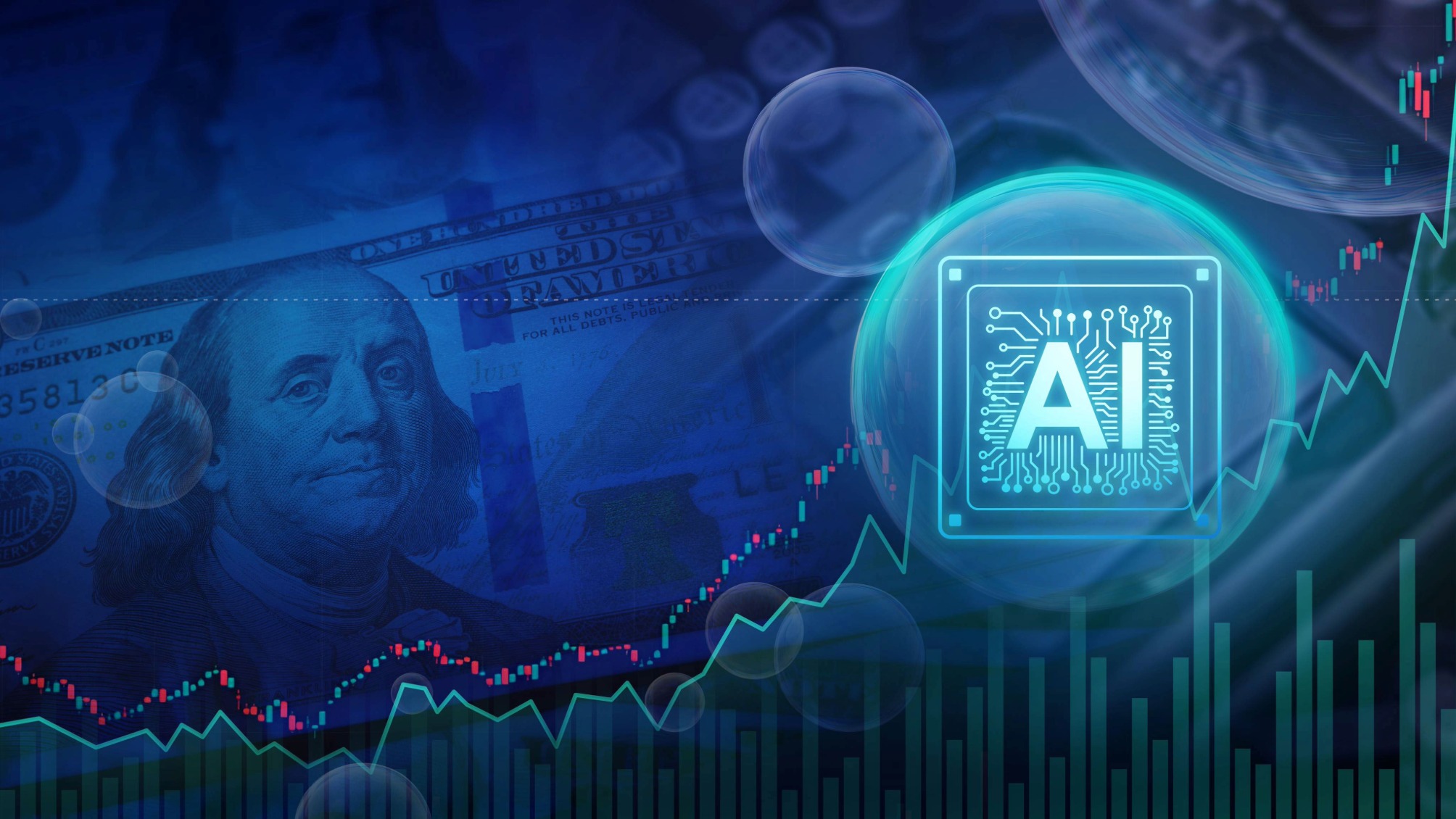 (Image credit: Getty Images)
- Copy link
- X
It can feel like every day brings a fresh batch of headlines about the financial promise of artificial intelligence. But alongside that excitement is a growing concern: What if we're in an AI bubble?
The question isn't just for investors who own AI-specific stocks. The Magnificent Seven — virtually all of whom are making massive investments in AI — now account for roughly one-third of the S&P 500's value.
With Americans holding a record 33% of their wealth in stocks, and a relatively small group of tech companies driving an outsized share of returns, you may be invested in AI without even realizing it.
From just $107.88 $24.99 for Kiplinger Personal Finance
Become a smarter, better informed investor. Subscribe from just $107.88 $24.99, plus get up to 4 Special Issues
CLICK FOR FREE ISSUE
Sign up for Kiplinger’s Free Newsletters
Profit and prosper with the best of expert advice on investing, taxes, retirement, personal finance and more - straight to your e-mail.
Profit and prosper with the best of expert advice - straight to your e-mail.
Sign upFortunately, caution doesn't necessarily require abandoning the stock market or avoiding AI altogether. The goal is to build a portfolio that can benefit from the technology's growth potential without tying your financial future too closely to a single trend.
Why some investors are concerned about an AI bubble
Many investors see echoes of the dot-com era in today's AI boom. In the late 1990s, internet stocks soared as investors rushed to profit from a world-changing technology. But when the market bubble burst, many companies failed and investors suffered steep losses.
About Adviser Intel
The author of this article is a participant in Kiplinger's Adviser Intel program, a curated network of trusted financial professionals who share expert insights on wealth building and preservation. Contributors, including fiduciary financial planners, wealth managers, CEOs and attorneys, provide actionable advice about retirement planning, estate planning, tax strategies and more. Experts are invited to contribute and do not pay to be included, so you can trust their advice is honest and valuable.
This story contains an important lesson for today: Investors can be right about a technology and still lose money.
Remember, you can't "bet" on artificial intelligence itself. Some companies involved in AI may have the potential to become long-term winners, while others may never generate the profits some investors might currently expect.
That doesn't mean there is definitely an AI bubble. But it does mean investors should be mindful of how much of their portfolio depends on a relatively small number of companies and distant expectations.
Five ways to manage AI risk in your portfolio
Whether AI is in a bubble is ultimately beside the point. Investors don't need to predict when enthusiasm has gone too far. The aim is to participate in the technology's potential for upside without becoming overly dependent on it.
Here are five considerations to help guide your investment decisions:
1. Understand your real AI exposure
Many investors own AI-related companies through S&P 500 funds, Nasdaq funds, growth funds, technology ETFs and employer stock. You might think you have a diversified portfolio, when in reality you could be invested in the same handful of large technology companies across separate funds.
2. Consider prioritizing companies with strong current profits
Valuations are often just expectations of future growth, not evidence of current earnings. Investors concerned about volatility may also favor lower-beta stocks, which tend to be less sensitive to broad market swings and speculative enthusiasm.
3. Consider AI infrastructure instead of AI speculation
Investors might consider companies that support the broader AI ecosystem — including semiconductor manufacturers, data-center operators, power providers and enterprise software firms. These businesses stand to benefit from AI adoption regardless of the form it ultimately takes.
4. Consider diversification beyond AI
Even if you're optimistic about AI's long-term potential, it shouldn't necessarily become the defining driver of your portfolio. Exposure to a variety of other sectors and asset classes can help reduce dependence on a single theme.
Looking for expert tips to grow and preserve your wealth? Sign up for Adviser Intel, our free, twice-weekly newsletter.
5. Consider rebalancing rather than trying to time the market
Review asset allocations regularly, consider trimming positions that have grown disproportionately large and possibly reinvesting in underrepresented areas. Rebalancing can help manage risk no matter where the market turns, but keep in mind that rebalancing, asset allocation, and investment diversification do not guarantee a profit or protection against loss in a declining market.
You don't need to know whether AI is a bubble
No one knows whether today's AI boom will end in a bubble or continued growth. But investors don't need to predict the outcome to be prepared.
By understanding their exposure and avoiding excessive concentration, they can participate in AI's potential upside without tying their financial future to the possibility of success of a handful of companies.
Related Content
- How to Spot a Bubble in Stocks
- The Boy Who Cried 'Bubble': What if He's Right This Time? What Investors Need to Consider
- While You're Fretting That There's an AI Bubble, You Could Be Missing a Huge Investing Opportunity
- Finances Not Going Anywhere? These 3 Steps Can Help You Find Your North Star
- Four Ways to Navigate the Bumps of Today’s Volatile Market
This article has been written by an outside source and is provided as a courtesy by Stephen B. Dunbar III, JD, CLU (AR Insurance Lic. #15714673), Executive Vice President of the Georgia Alabama Gulf Coast Branch of Equitable Advisors LLC. Investing involves risk, including loss of principal invested. This information does not constitute an offer, solicitation, or recommendation and should not be relied upon as investment or financial advice or a recommendation of particular courses of action for all investors. Equitable Advisors LLC and its affiliates do not make any representations as to the accuracy, completeness or appropriateness of any part of any content hyperlinked to from this article. Your unique needs, goals and circumstances require the individualized attention of your own financial advisors and financial professionals whose advice and services will prevail over any information provided in this article. Stephen B. Dunbar III offers securities through Equitable Advisors LLC (NY, NY 212-314-4600), member FINRA, SIPC (Equitable Financial Advisors in MI & TN), offers investment advisory products and services through Equitable Advisors LLC, an SEC-registered investment adviser, and offers annuity and insurance products through Equitable Network LLC (Equitable Network Insurance Agency of California LLC). Financial professionals may transact business and/or respond to inquiries only in state(s) in which they are properly qualified. AGE-9043520.1 (07/26)(exp.07/30)
DisclaimerThis article was written by and presents the views of our contributing adviser, not the Kiplinger editorial staff. You can check adviser records with the SEC or with FINRA.
TOPICS Adviser Intel AI Get Kiplinger Today newsletter — freeContact me with news and offers from other Future brandsReceive email from us on behalf of our trusted partners or sponsorsBy submitting your information you agree to the Terms & Conditions and Privacy Policy and are aged 16 or over.Stephen B. Dunbar III, JD, CLUSocial Links NavigationExecutive VP, Equitable AdvisorsStephen Dunbar, Executive Vice President of Equitable Advisors’ Georgia, Alabama, Gulf Coast Branch, has built a thriving financial services practice where he empowers others to make informed financial decisions and take charge of their future. Dunbar oversees a territory that includes Georgia, Alabama and Florida. He is also committed to the growth and success of more than 70 financial advisers. He is passionate about helping people align their finances with their values, improve financial decision-making and decrease financial stress to build the legacy they want for future generations.